
How Joint Cartilage is Nourished
Joint cartilage lacks blood vessels. It primarily receives nutrients through diffusion from the synovial fluid. Another portion of nutrients is supplied by the vascular system of the subchondral bone.
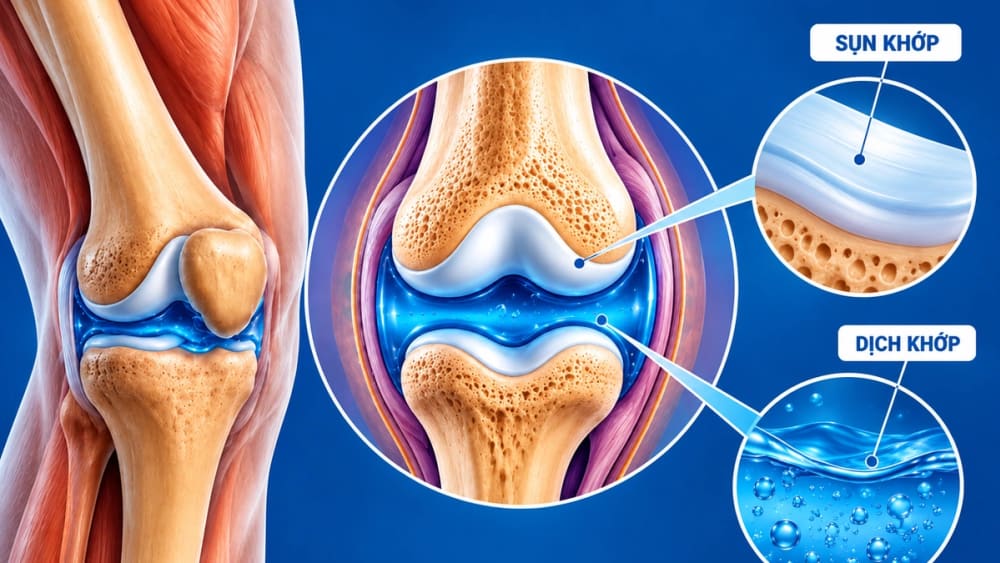
Joint cartilage is a unique tissue in the body, playing a crucial role in reducing friction and absorbing shock at the joints. Notably, joint cartilage does not contain blood vessels, a characteristic that distinguishes it from many other tissues. Lacking its own vascular system, joint cartilage must rely on alternative mechanisms to receive the nutrients essential for its maintenance and function.
The primary mechanism for joint cartilage to obtain nutrients is through the process of diffusion. Nutrients are transported from the synovial fluid, a viscous liquid found within the joint cavity, surrounding the cartilage. Synovial fluid contains many important nutritional components, and these substances move from the synovial fluid into the cartilage due to concentration differences. Additionally, a portion of nutrients is supplied from the vascular system of the subchondral bone, which is the bone located directly beneath the cartilage layer. The combination of these two supply sources ensures that joint cartilage receives sufficient nutrition to maintain its structure and function, despite the absence of direct blood vessels.
Key points
* Joint cartilage lacks blood vessels.
* Nutrients are primarily received via diffusion from synovial fluid.
* A portion of nutrients comes from the vascular system of the subchondral bone.
Nguồn / Source: VnExpress - Sức khỏe
Ask The Guide to summarize, translate, or find related places and events.
Open Companion